
Aug 24, 2026
By Rick McNary
In the delightful movie, "Secondhand Lions,” Robert Duval and Michael Caine star as Hub and Garth McCann, a mysterious pair of wealthy older brothers who retire to country living. Their first order of business was to plant a garden, so they purchased tomato, carrot, pea and bok choy seeds from a traveling salesman, donned a new pair of bib overalls and carefully planted their seeds. However, once the plants began to grow, it was apparent they had planted nothing but corn. When Hub (Duval), realized it was all corn, he threw his hoe down in disgust and griped, “Corn, corn, corn!”
As I traveled down the highway recently with my young grandson, who is a "Secondhand Lions” fan, he looked out the window and exclaimed, “Corn, corn, corn!” Then he asked if we could stop by a field and pick a few ears of corn for dinner that night. He eats corn on the cob with the ravenous delight of our dog raiding the pup snacks.
I explained to him there were two reasons we shouldn’t stop and help ourselves. First, a farmer would soon harvest the corn, which he or she would take to a grain elevator, then sell it. That’s how they made their living so to take their corn would be like stealing from their bank account.
The second reason was that it would not taste anything like the kind of corn on the cob he is accustomed to devouring. It gave me a great opportunity to teach him what I’ve learned about the four types of corn.
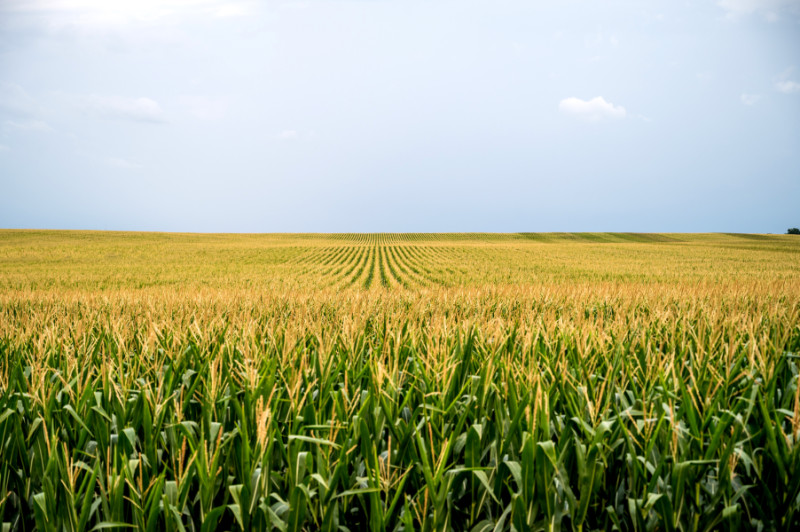
Field corn is the most prolific crop that lines our highways and country roads this time of year and makes up for more than 94 percent of corn production in America. It is fed to cattle, pigs and poultry as either a whole grain, or ground and mixed with other food types like hay, or fermented silage.
Field corn is also used in ethanol plants to create renewable fuel such as E85 you might see at a gas pump. Field corn can also be turned into high-fructose corn syrup or ground into cornmeal and used in tortillas.
Flint corn, also known as calico corn or Indian corn, is the vibrant, multi-colored corn often used as fall decorations. It’s best if it is milled down and then used for tortillas, cornmeal or polenta.
Sweet corn, the kind my grandson likes to devour as much as I do, is grown for human consumption. It’s typically shorter than field corn and harvested earlier so it’s more tender. Those who grow sweet corn in rural areas know the biggest challenge is to harvest it before the raccoons beat you to it.
Popcorn is grown for, well, popcorn. What makes popcorn unique is that it consists of a hull that surrounds a gel-like starch that has a tiny drop of water inside of it. When the water reaches a temperature of 347 degrees Fahrenheit, it explodes and the gel forms the popcorn as it cools.
Most popcorn is grown in a band including Nebraska, Iowa and Illinois under contract to popcorn companies, so the farmer knows they have it sold before they grow it. There are two basic shapes of popcorn: butterfly and mushroom. Butterfly is the classic movie theater popcorn that features a snowflake shape with wings protruding in all directions. Its tenderness helps it hold on to melted butter.
However, the Baldwin family near Inman grow and sell their own popcorn ─ Papa Baldy’s Poppin’ Snacks. They found a processor to separate the kernels into size and color, then a screen allows the bigger kernels to continue on a conveyor belt past a color separator. The machine looks at each kernel and, if the color is wrong, blows the unwanted kernel off with a puff of air. Those unwanted kernels become hog feed for local farmers.
Regardless of what kind of corn or how it’s grown, the United States is the world's largest producer, consumer and exporter of corn, planting around 90 to 96 million acres annually. Total annual production typically ranges between 14 and 16 billion bushels.
The next time you want to purchase sweet corn or a bag of Papa Baldy’s Poppin’ Snacks, you can find local farmers at www.shopkansasfarms.com.