Oct 06, 2026
By Rick McNary
It’s a long way from southern California to northwest Kansas, but Myndi Krafft is glad she made the move with her husband, Jason, and their children to Jason’s family farm near Phillipsburg.
“There were a lot of adjustments for me,” Myndi says. “I grew up in Murrieta with a population of 400,000 and moved to Phillipsburg with a population of 3,000. It took a while to get used to traveling an hour and a half to go to Walmart when I had one right behind my house in California.”
Although Myndi grew up in the city, the stories she heard of her grandfather who farmed in Kansas and Oklahoma stirred a desire to study agriculture.
“A lot of people in the city aren't as closely tied to agriculture and where their food comes from,” Myndi says. “I decided I was going to get my degree so I could become an ag teacher. I was working on my master’s degree at Cal Poly when I met Jason. He had grown up on the family farm in Phillipsburg but decided to study in California so he could see a different side of agriculture.”
They married and lived in Hollister but decided they wanted to raise their children on the family farm. “We just needed our lifestyle to slow down so we could spend more time with the girls,” she says. “Now that we are here, their mom and dad don’t leave for work; they’re already there. Our girls have learned deep life lessons they could only learn on the farm about raising animals and working together as a family. They understand the circle of life, how to raise livestock purposefully and what happens at the end of their life. They understand animals and nature in ways living in the city would never afford them.”
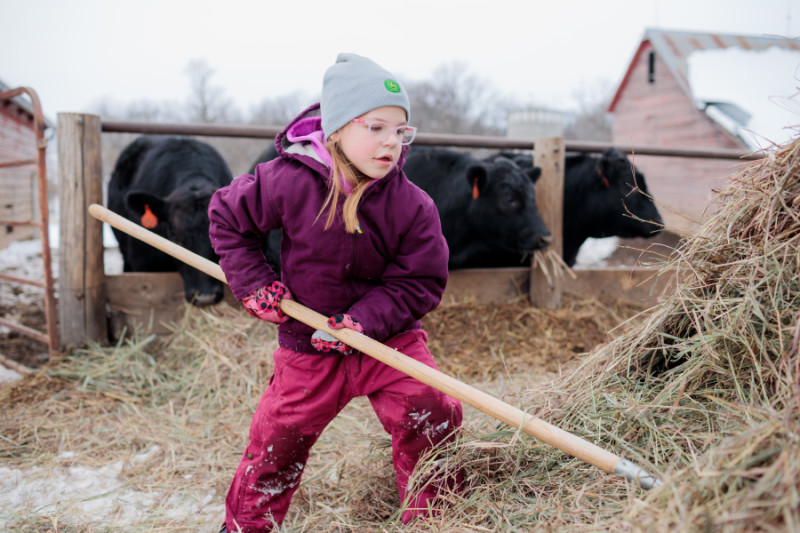
Often up before dawn and finally laying their heads to rest long after dark settles in, every member of the family is a part of keeping the animals alive and crops tended. Small children learn quickly that they have responsibilities such as bottle-feeding baby calves, collecting eggs and the endless, daily activity of feeding and watering the animals.
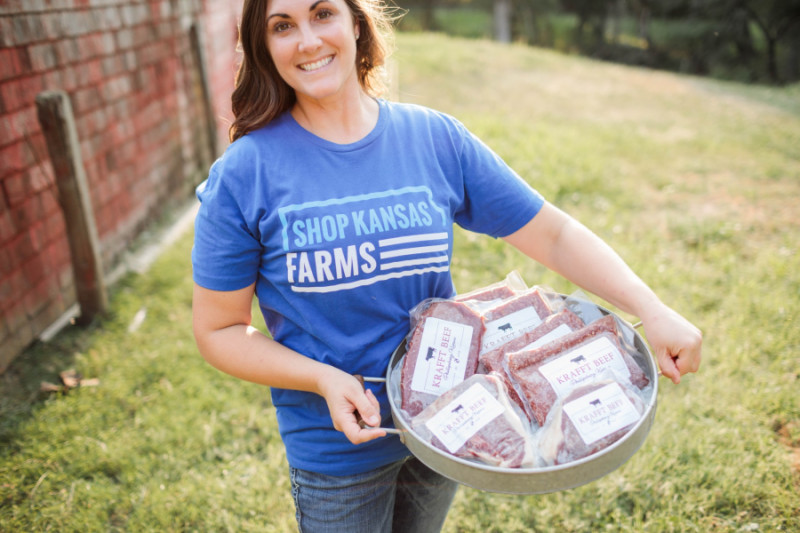
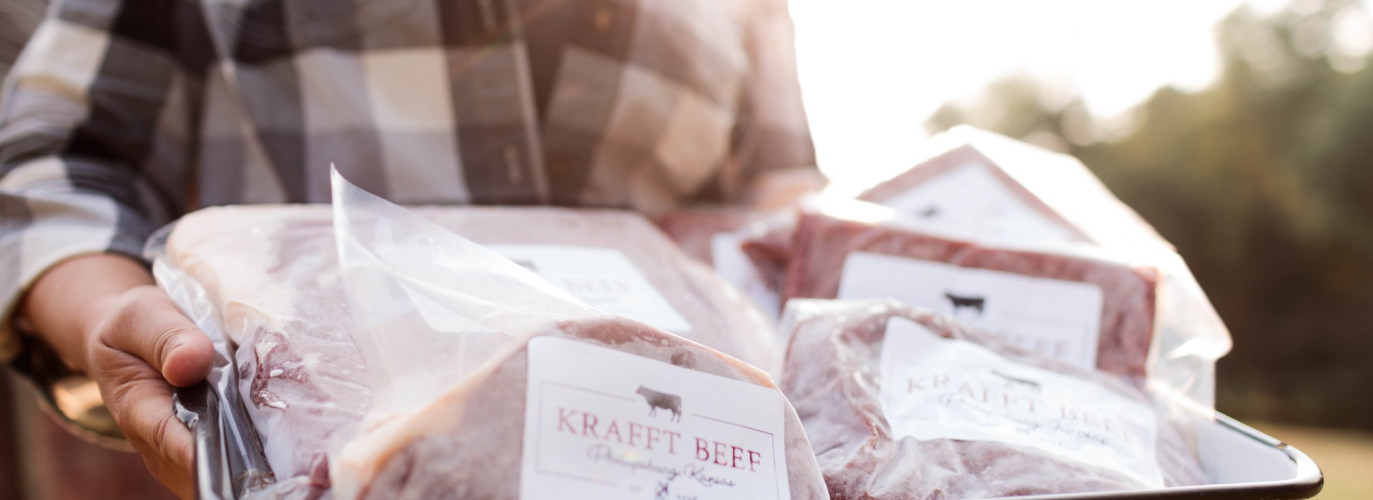
“Jason grew up on the family farm, and he knew the value of working together as a family,” she says. “When we moved back to Kansas, we wanted to farm alongside the family but also carve out our space in it where we could add value. I felt like I had a lot to contribute, and the direct-to-consumer (DTC) sales of our beef would be one way to do that, so we started Krafft Beef.”
Myndi attended Five Mary’s Ranch in California, a working ranch which offers courses in creating the business model of DTC sales, especially how to ship frozen meat products across the United States.
“There are a lot of farms and ranches that sell beef in quarters, halves or whole, but they can only do so locally,” she says. “However, to create a niche market to sell individual cuts to a national market is an entirely different business model. First, it must be processed at a USDA-certified facility which is not easy to find or schedule and, second, you have to learn how to ship with dry ice, which is not always easily available in northwest Kansas.
“Even raising the animals is a different process,” she says. “For example, most people raise cattle so they all reach the same weight about the same time. But for our model, we have to raise the animal in such a way that each one reaches their ideal weight at different times. It’s a three-year process from start to finish for an animal and making sure you have a locker date for your animal is part of the scheduling challenge.
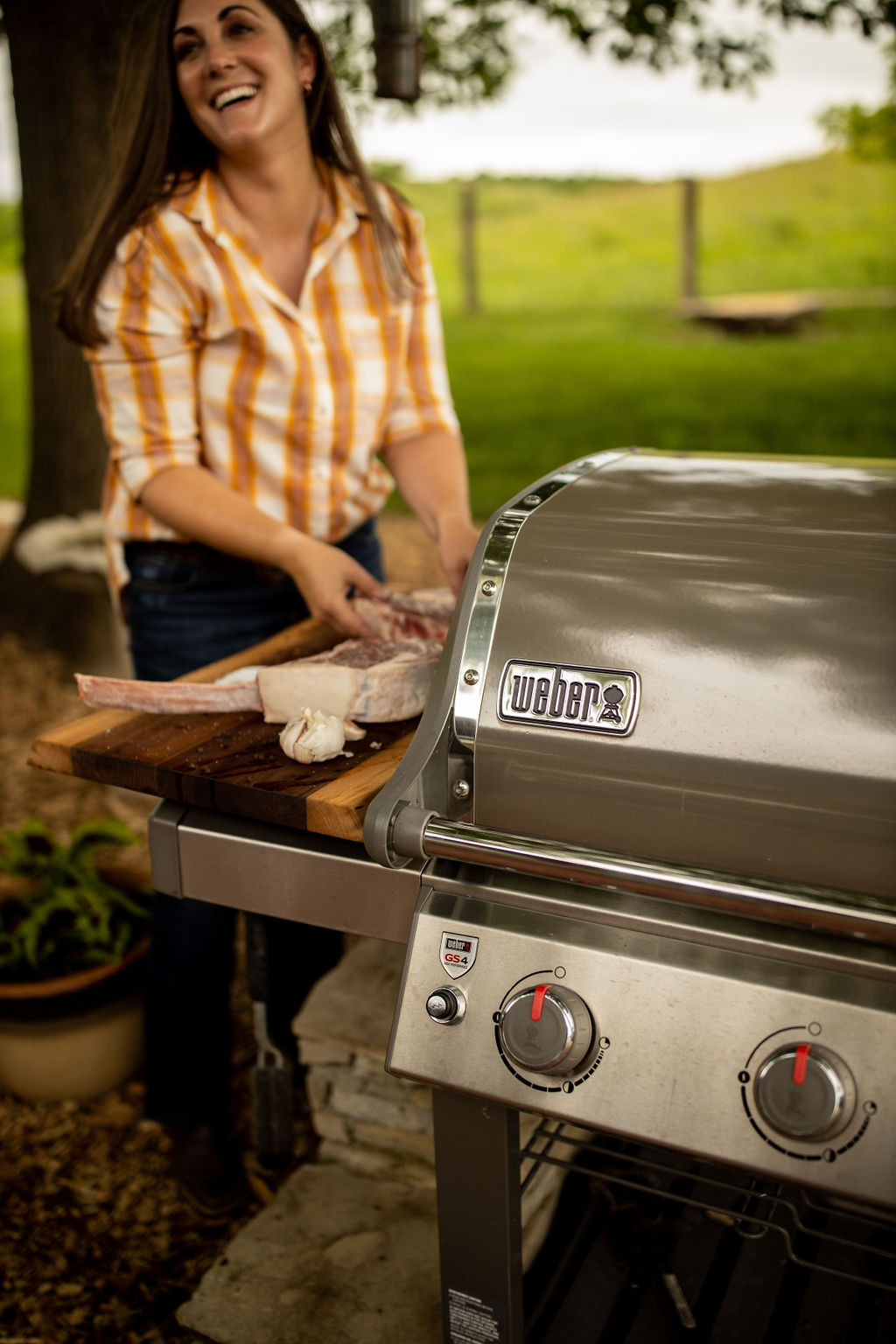
“Another unique part of this business is you’re not just following whatever the market is, you’re telling your story and people are looking for a story with their food. We knew to be successful, we would need to slowly build repeat customers over time who know us and know our story.”
Jason and Myndi began developing their plan a full year and a half before they launched their business on May 1 of 2020, just as the pandemic was going into full effect.
Since I had met Myndi before I launched Shop Kansas Farms and knew they sold Krafft Beef, she was one of the first ones I messaged when I created it, giving her the heads up of a way she could advertise their products.
“We were fortunate we were already headed in that direction when that hit,” Myndi says. “COVID-19 showed us we had no control over the supply chain. Panic and fear set in when people saw empty shelves and people lost a lot of confidence in our food supply. Since we were poised to launch, we gained many new customers from around the state and nation as people began to look for alternative ways to purchase food.
“I didn’t know what it looked like,” she says. “But I knew this industry was not going to return to normal even when COVID-19 went away. People found their fears calmed when they could purchase products directly from a farm, and that created an awareness for our industry no marketing scheme could ever have done.
“Social media is a big piece of it,” Myndi says. “And we have found that establishing an audience through email is our best marketing strategy. That’s where the orders come from because dedicated customers follow emails.
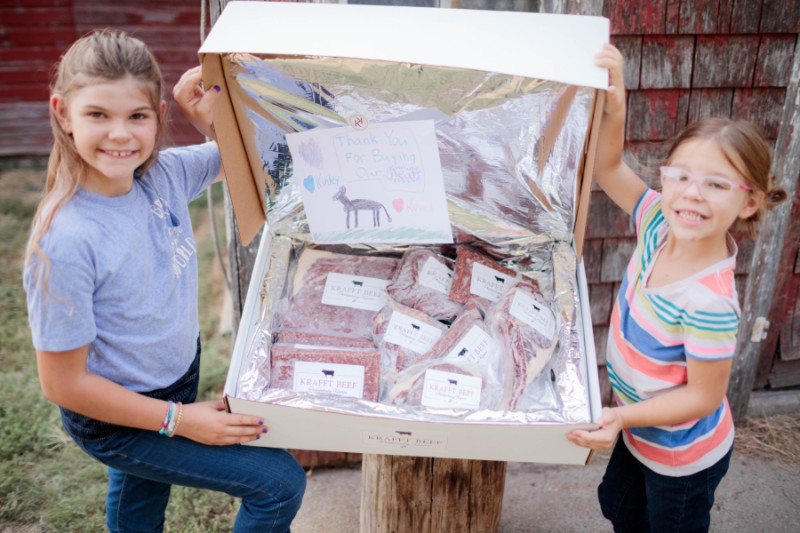
“That also means customer relations with emails, sending out thank you cards, which included drawings our kids have made, have a website where people can chat with us that goes right to our phone, texting, answering and returning phone calls is all a part of the business.
“One of my favorite stories is of a couple who grew up north of us but now live in a big city on the East Coast,” she says. “They are thrilled to be able to find a source of beef that tasted like they remember growing up and it becomes a conversation piece when they invite their friends over for dinner.
“This is unconventional with challenges and pushbacks,” Myndi says. “But the connections we’ve made, the added income, cutting out things in the middle and doing more with less ensures we can continue living in our small, rural community and making a living for the farm and a life for our family. It’s a way of life that is good for our family.”
Learn more about Krafft Beef at krafftbeef.com