
Nov 11, 2026
By Rick McNary
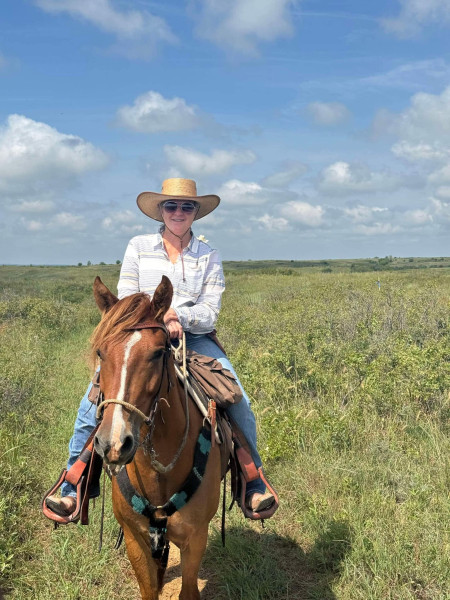
Stephanie Eckroat attributes her love of agriculture to working with her grandfather who had a large garden in the small town of Kincaid in eastern Kansas.
"I was raised a military brat,” Stephanie jokes. “My dad was a drill instructor, so he was kind of a no-nonsense dude. But when he retired from the Army, we moved to Kincaid and I became my grandpa’s hired hand. The pay was questionable, but I was just a kid, how was I to know I was being taken advantage of?"
Her grandfather was in his 80s and had grown up during the Depression, so he was very thrifty and saved everything.
"I’d work with him in the garden all week, then we’d take produce to sell in Garnett at the local auction every Tuesday."
What was her pay for the week? He would stop by Sonic on the way home, buy her a fish sandwich, a pop and give her five bucks.
"I thought I was rich, and as I look back, I was," Stephanie says.
She began attending Crest High School in nearby Colony and joined the FFA program, a nation-wide agricultural education program. This agricultural program is designed primarily for high school students and helps them narrow their focus through a Supervised Agricultural Experience (SAE).
According to FFA’s website, “Supervised Agricultural Experience is a practical, hands-on, work-based learning students experience through a student-led, instructor-supervised project specialized to them. SAE is one core part of agricultural education and is, at its heart, career exploration. SAE gives students the ability to develop their career and college readiness, agricultural literacy and generally prepare them for life after high school. While we would love everyone to choose agriculture for their future career, we know students are best served by defining a clear path they are excited about.”
Little did Stephanie know that participating in FFA during her high school years would be a lifechanging experience.
Stephanie had always loved animals, especially horses, so she learned how to judge horses and other livestock during her high school FFA experience. She then joined the Allen County Community College livestock judging team. From there, she attended Fort Hays State University to continue her livestock judging career and to work on a degree in animal science. While there, she became involved in their dairy program and spent more than 22 years as the assistant manager and then manager of their dairy program.
“I loved working with the dairy program and the students, and when that chapter came to a close, it was difficult to imagine what would come next,” she says. “I tried a few things but never quite found the right fit. Then a group of dairymen I knew from my time at the dairy hired me as executive director of the Kansas Dairy Commission and Association. I did that for eight years until a Farm Bureau county coordinator position opened for Ellis and Trego counties. A few years later she would also take on Russell County as well.
“Joining Kansas Farm Bureau felt like finding my place in agriculture all over again,” Stephanie says. “It had that same sense of connection and purpose I had found in FFA. I always say Farm Bureau is the adult version of FFA.”
Regardless of her professional pursuits, horses have always been Stephanie’s first love in agriculture. Along the way, she married Mike Eckroat and together they built a horse facility and boarding stables near Hays. They had been around numerous breeds and disciplines of horses, but about 20 years ago their daughter surprised them with a unique niche of horses they had not yet explored: mustangs.
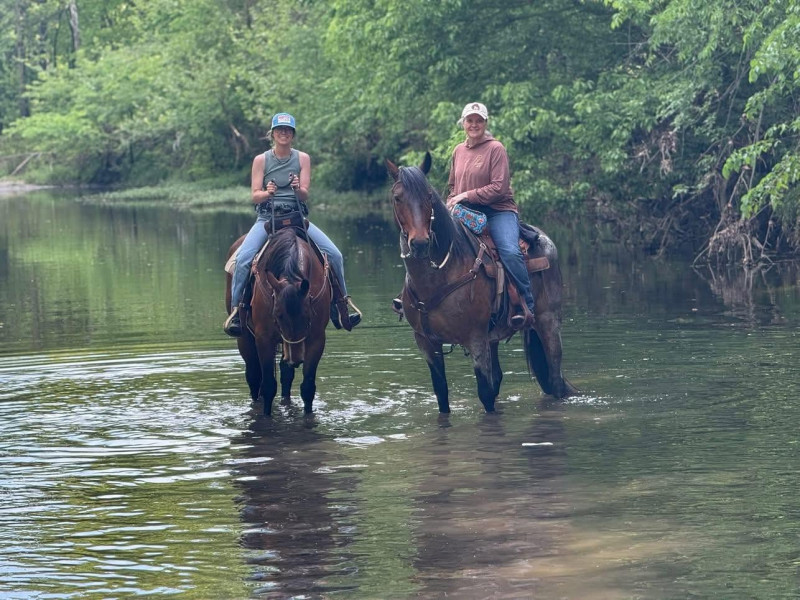
“We had bought our daughter a new horse that happened to be a rescue horse and it was a wonderful horse, but sadly, it died,” she says. “She still wanted to ride, so we shopped around for a horse and we just couldn’t find the right fit for her. We happened to be at the State Fair and the Hutchinson Correctional Facility had a display of the wild horses that are trained by the inmates. There was one cute little gray horse that our daughter fell in love with and told us, ‘That’s the one!’ We made her do all the paperwork. She had to go to the Fair office and fax it to the Bureau of Land Management to get it approved. We purchased him, took him home and three days later he cleared a six-foot fence and took off.”
A trash truck had slammed a lid and spooked the horse. At this point they were questioning their decision to bring home a wild horse but when their daughter walked out in the pasture with halter, he came right up to her to be caught.
"We still have the horse today and the grandkids ride him now.
“Our family had a hand in more than 30 mustangs and burros finding homes around the country. The program at the correctional facility has been a great one for the inmates and the horses. Inmates not only learn how to train horses, but also learn other skills like leatherwork, how to doctor a horse and how to trim their hooves. The program almost ended this last spring but has thankfully been renewed for another five years.”
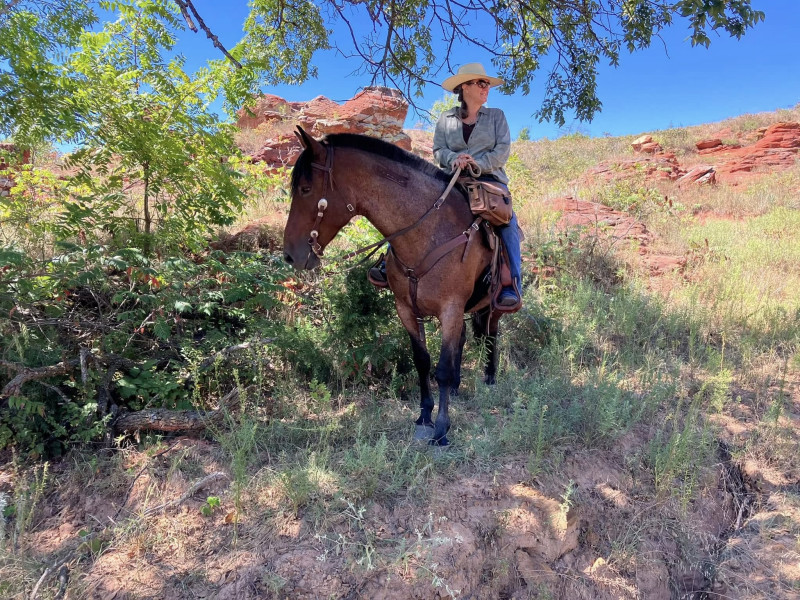
Stephanie and Mike recently moved from Hays to Park City to be closer to family. She now serves Farm Bureau as a field services manager (FSM) where she provides support for 10 county Farm Bureaus.
In addition, she recently joined our Shop Kansas Farms team as a brand ambassador for the Sedgwick County Harvest Hub. In that role, she meets and writes about various farmers in the Sedgwick County Harvest Hub network.
“Supporting local producers and helping communities stay connected to their food sources is something I care deeply about,” she says. “I’m thrilled to be part of the work the Sedgwick County Harvest Hub is doing to help strengthen the bridge between our farmers and the families they feed."
Her grandfather would be so proud. He might even bump her wages up to $10 a week.